
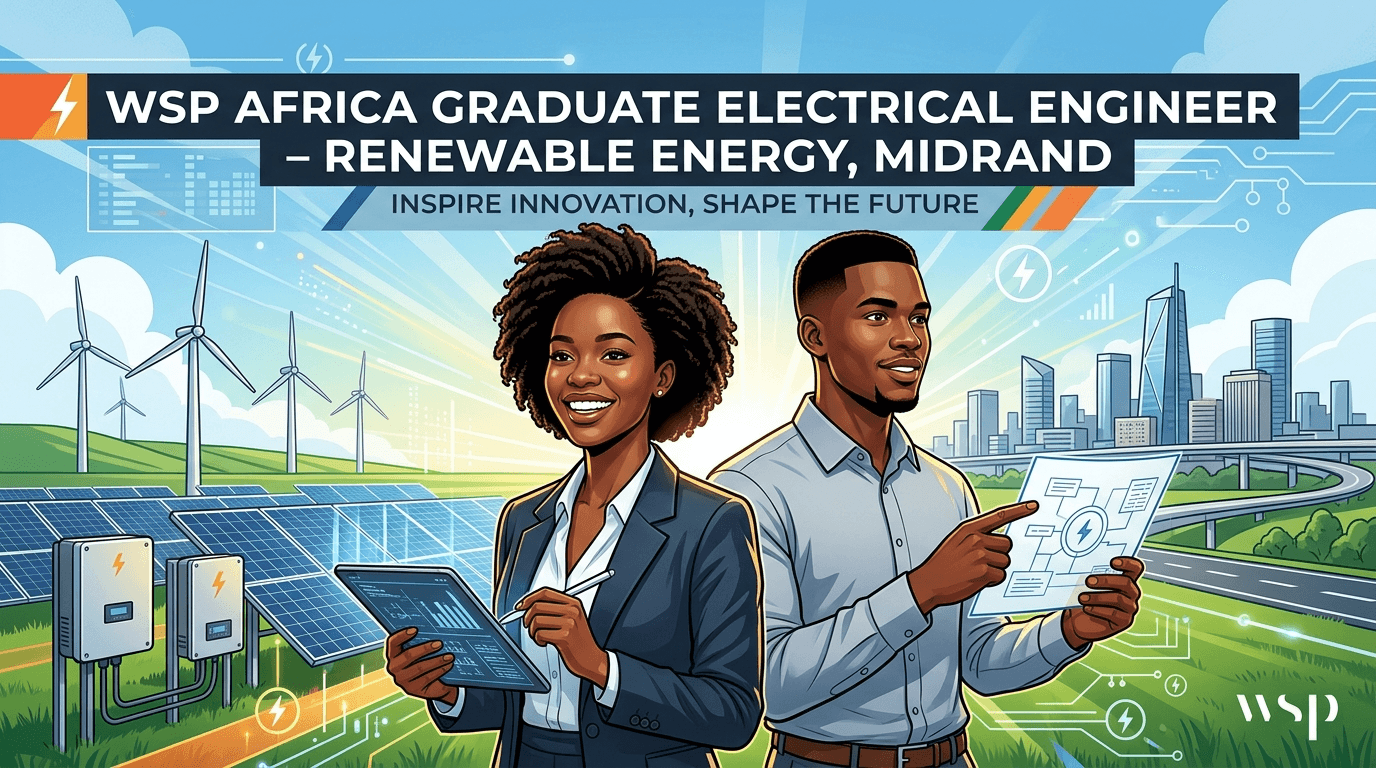

Renewable energy projects are expanding fast across South Africa, and the demand for fresh electrical engineering talent is higher than ever. WSP Africa is now looking for a Graduate Electrical Engineer to join its Power & Energy team in Midrand, giving you a chance to start your career in a growing field.
What the opportunity is
WSP Africa’s Power & Energy team in Midrand, Gauteng, needs a full‑time Graduate Electrical Engineer. The role is on‑site and is aimed at recent graduates or engineers with up to two years of experience. You will work on solar, wind, battery and grid‑connection projects, supporting technical reviews, calculations, drawings and client‑facing reports.
Who can apply
- Qualification: BSc, BEng or BTech in Electrical Engineering.
- Experience: Fresh graduate or 1–2 years of relevant engineering work.
- Sector exposure (optional but helpful): solar PV, wind, battery storage, grid‑connection or power‑systems work.
- Professional registration: Candidate Engineer registration with ECSA, or a clear plan to register, strengthens your application.
- Key skills: Good written and verbal communication, attention to detail, ability to work in a multidisciplinary team, time‑management and a willingness to learn.
What you will gain
- Hands‑on experience with real renewable‑energy and grid projects.
- Mentorship from senior engineers and project managers.
- Opportunity to produce client‑facing technical documentation and design deliverables.
- Exposure to WSP’s health, safety, environment and quality (SHEQ) standards.
- Professional development that supports future ECSA registration.
How to apply
- Visit the official WSP career page: Apply via WSP career page.
- Follow the prompts to create an account or log in.
- Upload an up‑to‑date CV and a short cover letter that explains your interest in renewable energy and why you want to join WSP’s Power & Energy team.
- Attach any supporting documents (degree certificate, transcript, evidence of internships or project work, and a statement of your ECSA registration status).
- Provide contact details for two professional or academic referees.
- Review all information, submit the application, and keep the confirmation email for your records.
Tips to improve your chances
- Show concrete results: In your CV, list specific outputs you produced – a calculation sheet, a design drawing, a report section, or a model – and name the software used.
- Highlight projects: Include a brief (4‑6 line) description of your final‑year project or any coursework that relates to solar, wind, batteries or power systems.
- Demonstrate communication: Mention any technical reports, design notes or presentation you prepared, even if they were part of coursework.
- State your ECSA plan: If you are not yet a Candidate Engineer, write a short sentence about when you intend to register.
- Keep it clear: Use headings in your CV (Education, Technical Experience, Projects, Professional Activities) and keep each bullet concise.
- Prepare for the interview: Review basic power‑system concepts, renewable‑technology basics and how you check the quality of calculations. Have two short stories ready that show problem‑solving and teamwork.
- Show SHEQ awareness: Mention any health‑and‑safety training or how you consider risk in design work.
Next steps
This role offers a solid start in South Africa’s renewable‑energy sector. If you meet the basic criteria and are eager to learn, submit your application before the closing date. Even if you feel you miss a few points, apply and highlight your transferable skills – employers often value potential and a strong desire to develop.