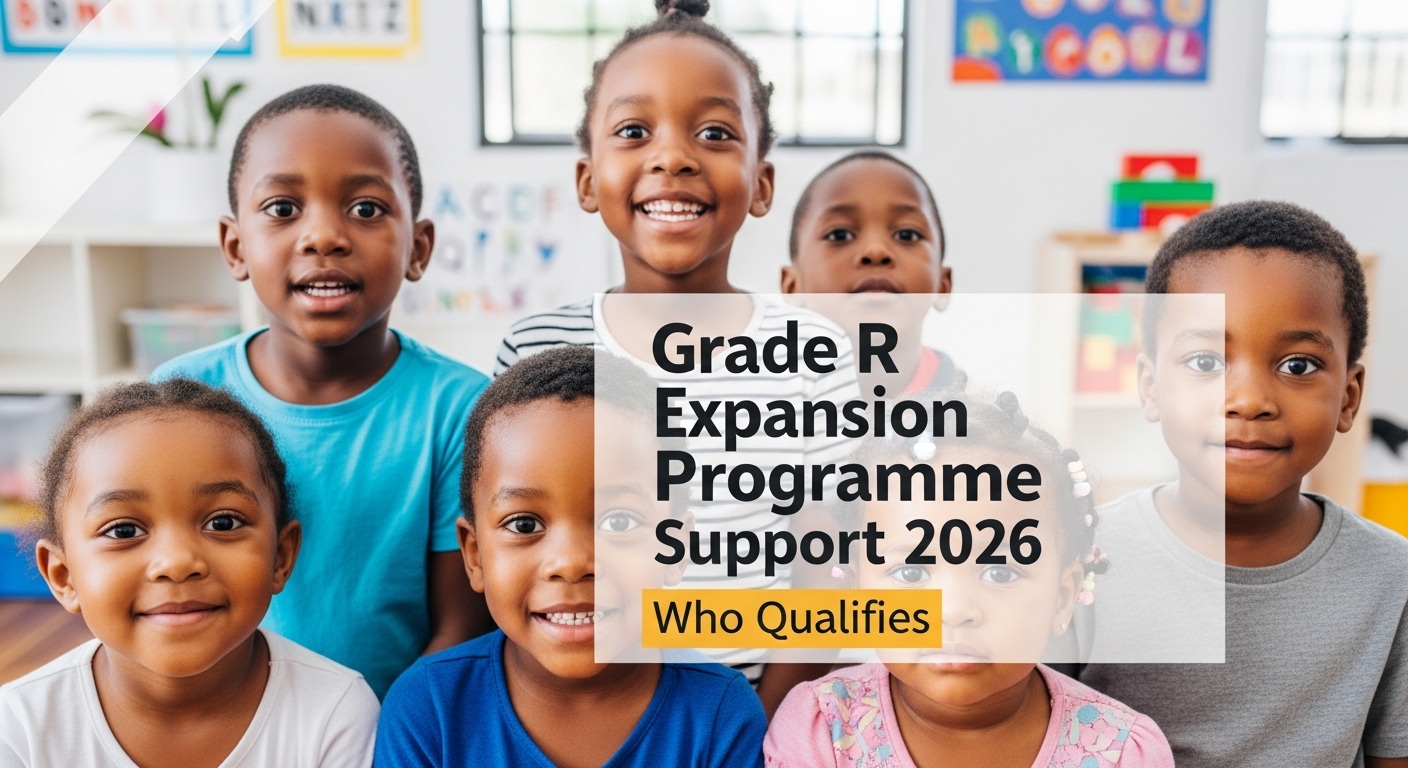

South Africa needs more children ready for school now, not later. That is why the Grade R Expansion Programme Support matters right now. In 2026, this programme continues to grow as government works to strengthen Early Childhood Development and improve the learning start of young children across the country.
Many families, practitioners, assistants, and unemployed youth are affected by this work. For some people, it can open a door to training, work exposure, centre support, and better learning spaces. If you are a parent, an ECD worker, or a young person looking for a way into the education sector, you should understand who qualifies and how the support works.
What the Grade R Expansion Programme Support Is
The Grade R Expansion Programme Support is a government effort led by the Department of Basic Education and Provincial Education Departments. Its main goal is to expand access to Grade R and improve Early Childhood Development services.
This support is not only for one group. It can include Grade R learners, registered ECD centres, ECD practitioners, assistants, community-based programmes, and unemployed youth linked to training or placement opportunities.
Quick overview:
- Programme name: Grade R Expansion Programme Support 2026
- Sector: Basic Education / Early Childhood Development
- Managed by: Department of Basic Education and Provincial Education Departments
- Main focus: Expanding Grade R access and strengthening ECD services
- Who may qualify: Grade R learners, registered ECD centres, ECD practitioners and assistants, community-based ECD programmes, unemployed youth in ECD pathways
- Possible benefits: placement support, training, learning materials, centre upgrades, and some stipend-linked roles depending on the province
Who Can Apply or Benefit in 2026
This programme supports several groups. Many applicants struggle because they think only schools can benefit. That is not true. The support reaches children, centres, workers, and youth through different parts of the ECD system.
1. Children Entering Grade R in 2026
Children may qualify if they are turning 5 or 6 during the school year, are South African citizens or legally registered residents, and are applying to a registered Grade R class.
They must also meet the admission rules of the province or school where they apply.
Support may include:
- Placement in expanded Grade R classrooms
- Better learning environments
- Curriculum-based learning materials
- School readiness support programmes
Priority is often given to children from:
- Low-income households
- Rural communities
- Informal settlements
- Areas that were underserved in the past
2. Registered ECD Centres Offering Grade R
ECD centres may qualify if they are formally registered or conditionally registered, offer Grade R classes that follow DBE curriculum standards, meet safety and infrastructure rules, and employ trained practitioners or assistants.
Eligible centres may receive:
- Learning materials
- Classroom upgrades
- Practitioner support funding
- Nutrition programme alignment in some provinces
- Monitoring and training support
This is especially important for community-based centres moving into formal Grade R delivery.
3. ECD Practitioners and Assistants
Practitioners and assistants are a key part of this expansion. Many people in the sector want to grow, but they are not always sure where to start. This programme can help with skills and career pathways.
You may qualify if you:
- Work at a registered ECD centre
- Are enrolled in an ECD qualification programme
- Have an NQF Level 4 or Level 5 ECD certificate
- Are willing to take part in DBE training programmes
Support may include:
- Skills development training
- Professional growth pathways
- Teaching resource support
- Work exposure through placement programmes
In some provinces, assistant roles may also come with stipends through related education employment initiatives.
4. Unemployed Youth Interested in ECD Work
Unemployed youth may not apply to every part of the programme directly, but they can benefit through linked opportunities. These are often important entry points for young people who want work experience.
Linked opportunities may include:
- ECD assistant placements
- Classroom support roles
- Practitioner training pipelines
- Basic Education Employment Initiative placements
Common requirements include:
- Age between 18 and 34 years
- South African citizenship
- Unemployed status
- Interest in working with children
- Willingness to complete training modules
These opportunities can help you gain:
- Classroom experience
- Childcare exposure
- References in the education sector
- A path toward formal ECD qualifications
5. Community-Based ECD Programmes Transitioning to Grade R
Some informal learning centres are being supported to become recognised Grade R delivery spaces. This is a big step for many local centres that have been serving children for years.
These programmes may qualify if they:
- Register with the DBE
- Meet safety and compliance requirements
- Align with curriculum expectations
- Take part in practitioner training programmes
This support can help a centre move from a childcare space into a more structured learning environment.
What Support You May Get
The type of help depends on your province and your role in the programme. Support is not the same everywhere, so it is important to check local announcements.
Learning support may include:
- Classroom equipment
- Books and learning materials
- Teaching resources
- Curriculum guidance
Practitioner development may include:
- Short skills programmes
- Accredited training pathways
- Mentoring support
- Monitoring visits
Infrastructure improvements may include:
- Classroom upgrades
- Sanitation improvements
- Safer learning spaces
Employment-linked opportunities may include:
- Stipends for some ECD assistants through linked initiatives
- Work exposure for youth facilitators
- Classroom aides supporting Grade R teachers
Why Government Is Expanding Grade R Access
South Africa still has a serious problem. Many children start Grade 1 without the reading and learning readiness they need. This makes the first years of school harder than they should be.
Research shows that children who attend quality Grade R programmes are more likely to do well in school, stay in school longer, improve reading skills, and complete matric.
That is why this expansion is treated as a national priority. It is not just an education update. It is part of building a stronger base for the whole schooling system.
How Parents Can Apply for Grade R Placement Support
If you are a parent, do not wait too long. Many applicants struggle because they miss admission deadlines or forget key documents.
You should:
- Apply through the nearest primary school
- Contact registered ECD centres that offer Grade R
- Use the provincial education department portal, if available
- Apply early in the admissions cycle
Documents usually needed:
- Child’s birth certificate
- Parent or guardian ID
- Proof of address
- Clinic card, where required
Applying early can improve your chances of getting a place.
How Practitioners Can Access Training Support
If you work in ECD, keep checking official notices. Training opportunities often open for a short time, and many people only hear about them too late.
You should:
- Confirm whether your centre is registered
- Register for DBE-approved ECD training
- Contact your provincial ECD coordinator
- Follow announcements from education departments
Training opportunities are often offered through TVET colleges, SETA-supported programmes, and NGO education partners.
How to Apply
Step 1: Check whether you are applying as a parent, practitioner, assistant, centre, or youth candidate.
Step 2: Confirm that your school or ECD centre is registered or conditionally registered where required.
Step 3: Prepare your documents early. Missing papers can delay your application.
Step 4: Apply through the correct official channel, such as a school, provincial portal, or approved programme process.
Step 5: Track updates from your province and respond quickly if more information is requested.
Official application link: Apply online for the Grade R Expansion Programme Support here
Tips to Improve Your Chances
There is real demand for Grade R and ECD support in South Africa, so competition can be high. You may not get support immediately, but careful preparation can help.
- Apply early and do not wait for the last day
- Keep all identity and school documents ready
- Use only official government or department channels
- Check if your centre is properly registered
- Make sure your contact details are correct
- For youth opportunities, stay ready for short notice calls
- Follow provincial education announcements often
If you are a young job seeker, it also helps to look at ECD learnerships, Basic Education assistant placements, and TVET college options that offer ECD qualifications.
Edupstairs Advice
If you want to work in education, this programme can be one of the strongest entry points in 2026. It may not lead to a job for everyone, but it can help you build the skills and experience many employers want.
Here is what you should do now:
- Apply for ECD learnership opportunities
- Watch for Basic Education assistant placements
- Register at a TVET college that offers ECD qualifications
- Volunteer at a registered ECD centre if you can
- Check provincial education updates often
ECD is no longer seen as just childcare. It is becoming a recognised career path with real demand across South Africa.
Frequently Asked Questions
Is Grade R now compulsory in South Africa?
Government is moving toward universal access, and Grade R is becoming more closely linked to formal school preparation across the country.
Can unemployed youth apply directly to the Grade R expansion programme?
Youth usually apply through linked programmes like the Basic Education Employment Initiative or ECD training pipelines.
Do ECD practitioners need formal qualifications?
Yes. Most support programmes give priority to practitioners with NQF Level 4 or Level 5 ECD certificates, or those studying toward them.
Are community ECD centres eligible for support?
Yes. Registered and conditionally registered centres can qualify for learning materials and infrastructure support.
Does the programme provide stipends?
Stipends are usually provided through linked employment initiatives, not always through the Grade R expansion programme itself.
Final Word
The Grade R Expansion Programme Support is important because it helps children, centres, practitioners, and young job seekers at the same time. If you qualify, make sure you act early and use only official channels.
Do not wait until the last minute. Prepare your documents, check your registration status, and follow updates from the Department of Basic Education and your provincial education department. Every province may handle support a little differently, so staying informed matters.
Disclaimer: This article gives general guidance based on national Grade R expansion policies and related education support programmes. Availability of support may differ by province and official announcements.