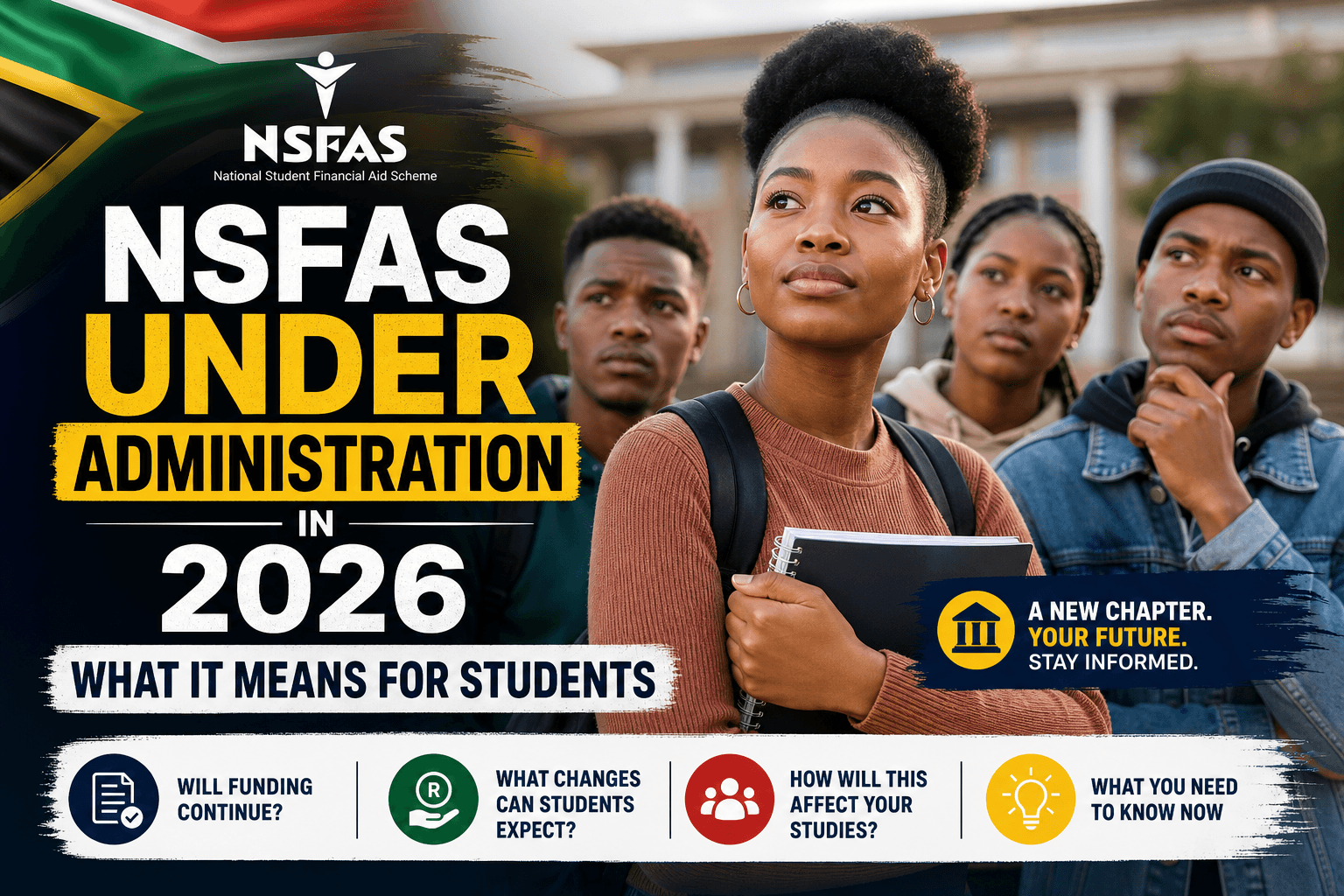

Right now, many students are worried about NSFAS. That is understandable. On 4 May 2026, the South African government placed NSFAS under administration because the organisation was facing serious leadership and financial problems. This matters because your funding, allowances, and accommodation support depend on a system that must work properly.
What NSFAS Administration Means
When NSFAS is placed under administration, it does not mean the scheme is closed. It means the current leadership loses control for now, and an administrator steps in to manage the organisation.
The aim is to fix the problems, improve oversight, and make sure student funding is managed correctly.
NSFAS will still operate, but under stricter supervision while the changes are made.
Why NSFAS Was Put Under Administration
The decision came after weeks of instability inside the organisation. Reports showed several serious issues.
- A leadership crisis at board level
- Disputes over the appointment of a CEO
- Board member resignations
- Concerns about financial controls and governance failures
There were also wider concerns about weak financial systems, poor verification processes, and repeated delays in student funding. These problems made it hard for NSFAS to operate smoothly.
Quick Overview
- Organisation: National Student Financial Aid Scheme (NSFAS)
- Date of administration: 4 May 2026
- Reason: Governance crisis, leadership instability, and concerns about financial mismanagement
- Key issue: Board conflict, CEO appointment disputes, and system failures
- Impact on students: Funding, accommodation, and payment systems are being restructured
- Goal: Restore accountability, improve payment systems, and stabilise funding
Who Can Apply or Be Affected
This situation affects students who already receive NSFAS funding, as well as new applicants who are waiting for decisions.
If you are a university or TVET college student, you should pay close attention to your funding status, registration details, and allowance information.
Many applicants struggle when documents are missing or banking details are wrong, so it is important to stay organised.
What You Gain From the Changes
The administration is meant to fix broken systems. If it works well, students may benefit in the long term.
- Better control over payments
- More accurate verification of student information
- Reduced fraud in accommodation and allowances
- Improved accountability from institutions and providers
- A more stable funding process over time
One of the biggest planned changes is direct payment. This means money should go directly to students or verified service providers, instead of moving through unreliable middle steps.
How the Changes Affect Students in 2026
The most important question is simple: will you still get funded?
The answer is yes, if you have been approved and still meet the rules. NSFAS funding has not been cancelled.
However, you should expect some delays while the new system is being fixed. This may affect payment dates, accommodation approvals, and verification checks.
Accommodation support is also being reviewed. NSFAS wants to reduce problems like overcharging, false listings, and fake landlords. Only verified providers should benefit from the new process.
Universities and colleges will also face stricter checks. That means more document verification, tighter financial controls, and more responsibility for correct student data.
How to Apply or Check Your Status
If you are a new applicant or waiting for an update, keep using the official NSFAS process. Do not rely on rumours or unofficial messages.
- Visit the official NSFAS application or status portal through the official NSFAS channels.
- Log in with your correct ID number and account details.
- Check your application, appeal, or funding status carefully.
- Make sure your banking details, contact information, and registration information are correct.
- Upload any documents that NSFAS asks for as soon as possible.
- Keep checking for updates from your institution and NSFAS.
If you have already applied, do not submit the same information in random places. Only use the official NSFAS system and official communication channels.
Tips to Improve Your Chances
Many students lose time because they miss simple steps. You can avoid that by staying alert and organised.
- Check your NSFAS account often
- Keep your ID, proof of income, and registration details ready
- Make sure your banking details are correct
- Respond quickly if NSFAS asks for more documents
- Confirm your details with your college or university
- Keep copies of every document you submit
If your application is rejected, you can still appeal if you believe there is a valid reason. Appeal deadlines matter, so do not wait too long.
Why This Could Help in the Long Run
At first, this news may sound worrying. But administration is often used to clean up serious problems.
If the process is handled well, NSFAS could become more reliable, more transparent, and less open to fraud.
That is good news for students who have had to deal with late payments, missing allowances, and long verification delays in the past.
What You Should Do Right Now
If you depend on NSFAS, stay calm and keep checking official updates.
- Do not panic if you hear rumours
- Do not share personal information with unofficial pages
- Keep your documents updated
- Watch your payment dates and funding messages
- Report problems early through official NSFAS channels
Most problems become bigger when students ignore them for too long. A quick response can save you stress later.
Our Advice
This situation shows two things at the same time. First, there are serious problems inside NSFAS. Second, government is trying to fix them.
If you stay informed, keep your records correct, and follow the official process, you place yourself in a much better position.
Many applicants struggle because they wait until the last minute. Try to stay one step ahead.
Conclusion
The placement of NSFAS under administration on 4 May 2026 is a major step. It was not taken lightly. It points to deep governance and financial problems, but it also gives the system a chance to reset.
For students, the message is clear: your funding still exists, but the system around it is being rebuilt.
If the changes are managed properly, NSFAS could become stronger and more dependable for students in the years ahead.
Disclaimer
This article is based on the latest available public reports and official updates as of May 2026. NSFAS policies and timelines may change. Always verify information through official NSFAS channels.
EDUPSTAIRS IS A REGISTERED NON-PROFIT ORGANISATION NPO No: 232 – 182, PUBLIC BENEFIT ORGANISATION (PBO): 930066984. EDUPSTAIRS DOES NOT, IN ANY WAY OR FORM, SOLICIT MONEY OR CV’S FROM PEOPLE FOR JOBS. PLEASE BE AWARE OF PHONY JOB POSTINGS AND RECRUITMENT FRAUD. USE THE EDUPSTAIRS SCAM DETECTOR TOOL TO SPOT A SCAM BEFORE YOU APPLY.