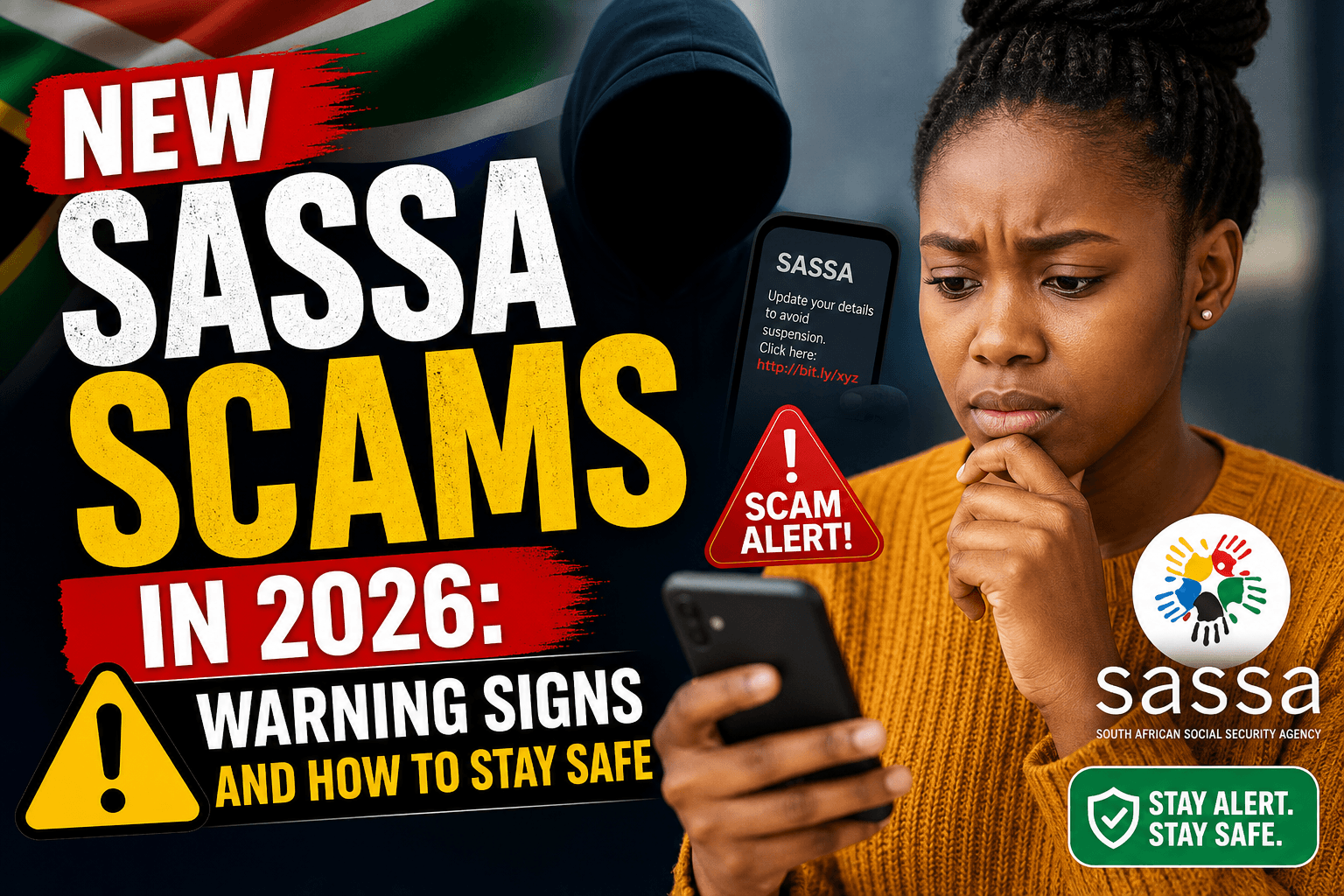

Scams aimed at SASSA beneficiaries are moving fast in 2026, and many people are losing money because the messages look real. If you rely on a grant, you need to be extra careful right now. One fake link, one phone call, or one signed form can lead to deductions, stolen details, or a blocked payment. For official social support information and public-sector services, always start with SETA and then verify everything through SASSA directly.
What this is about
This article explains the latest SASSA scams in 2026. It covers fake messages, fake jobs, unauthorized deductions, and fake insurance offers.
These scams affect older persons, child support grant caregivers, disability grant recipients, SRD beneficiaries, and unemployed young people looking for work.
The danger is simple: criminals want your money, your grant, or your personal details.
Who is affected
All social grant beneficiaries can be targeted. In South Africa, that includes people who receive:
- Older persons grants
- Child support grants
- Disability grants
- SRD grants
Many applicants already struggle with rising prices, transport costs, and long queues. Scammers use that pressure to trick people quickly.
The main scams to watch in 2026
1. Fake re-registration messages
Some messages claim you must “re-register” or lose your grant. These messages spread on WhatsApp, Facebook, and TikTok.
They are made to cause fear. They often ask you to click a link or share your ID number, phone number, or banking details.
SASSA has said there is no mass re-registration process. Do not trust these messages.
2. Unauthorized deduction scams
Some people are told they are only updating grant information. In reality, they are signing forms that allow monthly deductions.
This can happen with funeral policies or other services you never wanted.
Older beneficiaries are often targeted because the scammers know they may trust someone who sounds official.
3. Fake job adverts
Unemployed youth are being targeted with fake SASSA job posts. These adverts may appear on social media or job platforms.
You may see titles like “SASSA admin jobs” or “urgent vacancies,” followed by a request for payment or personal documents.
SASSA does not recruit through random social media pages. Be careful with any job advert that asks for money.
4. Insurance and funeral cover scams
Some fake companies use SASSA logos or claim they work with SASSA. They promise burial cover or special grant-linked insurance.
In many cases, the result is an unauthorized deduction from your grant each month.
SASSA has confirmed that it does not partner with private insurers in this way.
5. Fake back pay and grant recovery offers
Another common scam says you can claim “lost grant money,” “old back pay,” or “missing SRD payments.”
These messages are designed to get your ID number, bank details, or OTP codes.
If someone promises easy money from SASSA and asks for private details, treat it as a warning sign.
How these scammers work
Fraudsters usually use the same tricks.
- Urgency
They say you must act now or lose your grant. - Authority
They pretend to be SASSA staff and use fake logos or documents. - Opportunity
They promise jobs, extra money, or special benefits. - Data theft
They collect your ID number, phone number, PIN, or banking details.
This works because people are scared, busy, or desperate for help. That is why the scams keep spreading.
Why SASSA beneficiaries are targeted
Millions of South Africans depend on SASSA grants every month. Criminals know this money is needed for food, transport, school needs, and daily survival.
They also know that many people want quick answers. That is why they use pressure and false hope.
Some scams come from outside the system, while others use stolen or fake information that looks real.
How to spot a scam
Be careful if you see any of these signs:
- Someone asks for your PIN or banking details
- You are told to pay a fee to get a grant or job
- The link is not from an official SASSA website
- You are threatened with urgent grant cancellation
- The offer sounds too good to be true
Remember: SASSA services are free.
Who can apply or be affected
This is not a normal application opportunity. It is an awareness warning for everyone who gets a grant or works with grant information.
If you are a beneficiary, a caregiver, a parent, or a young job seeker, you should read this carefully.
What you gain by staying alert
You protect your grant money, your banking details, and your identity.
You also reduce the risk of unauthorized deductions and fake applications in your name.
Most importantly, you learn how to check information before you trust it.
How to protect yourself
Follow these steps every time you get a message about your grant:
- Check the message on official SASSA platforms.
- Visit your nearest SASSA office if you are unsure.
- Keep your PIN, ID number, and banking details private.
- Report suspicious calls, links, or messages right away.
Also avoid these mistakes:
- Do not share details on WhatsApp or Facebook
- Do not click unknown links
- Do not pay money to “fix” your grant
- Do not trust unofficial job adverts
How to apply or check information the safe way
If you are looking for a grant update, job opportunity, or official notice, use only trusted channels.
- Go to the official SASSA website or visit the nearest SASSA office.
- Read the full notice carefully before acting.
- Do not send documents to strangers on social media.
- Never share OTPs, PINs, or card details with anyone claiming to be from SASSA.
What to do if you were scammed
If you think you were tricked, act quickly.
- Report the issue to SASSA immediately.
- Call your bank and ask them to secure your account.
- Open a police case if money or documents were stolen.
- Change your passwords and PINs as soon as possible.
The sooner you act, the better your chances of stopping more damage.
Tips to improve your safety
Many South Africans lose money because they trust the first message they see. Slow down before you respond.
Ask one simple question: “Did this come from an official SASSA channel?” If the answer is no, do not act on it.
When in doubt, go in person or use the official website.
FAQ: SASSA scams in 2026
- Are WhatsApp SASSA messages real?
Most are fake unless confirmed by official SASSA channels. - Does SASSA charge fees?
No. SASSA services are free. - Can SASSA ask for my PIN?
No. Never share your PIN with anyone. - Are social media job posts from SASSA real?
Only trust job posts published on official SASSA platforms.
Final word
SASSA scams in 2026 are more believable than before, but they still depend on one thing: you believing the message without checking it.
Stay calm. Check before you act. Protect your details.
If it does not come from official SASSA channels, do not trust it.
Disclaimer
This article is for education and awareness only. Always verify information through official SASSA communication channels before taking action.
EDUPSTAIRS IS A REGISTERED NON-PROFIT ORGANISATION NPO No: 232 – 182, PUBLIC BENEFIT ORGANISATION (PBO): 930066984. EDUPSTAIRS DOES NOT, IN ANY WAY OR FORM, SOLICIT MONEY OR CV’S FROM PEOPLE FOR JOBS. PLEASE BE AWARE OF PHONY JOB POSTINGS AND RECRUITMENT FRAUD. USE THE EDUPSTAIRS SCAM DETECTOR TOOL TO SPOT A SCAM BEFORE YOU APPLY.