
Getting help from the National Student Financial Aid Scheme (NSFAS) could be the difference between starting university and staying at home. The deadline is close, and many students find their applications delayed because the income you report cannot be verified. Knowing how the verification works will help you avoid those setbacks.
What the opportunity is
NSFAS offers fully funded places for tuition, textbooks, accommodation and meal plans. The assistance is meant for students who cannot pay for higher education themselves. If you qualify, your study costs are covered for the duration of your degree.
Who can apply (requirements and eligibility)
- South African citizens or permanent residents.
- Students enrolled at a public university, TVET college or private higher‑education institution that accepts NSFAS funding.
- Household’s combined annual income must fall below the threshold set by the government (check the latest figures each year).
- Provide accurate details for all parents, legal guardians, spouses or anyone who financially supports you.
- Meet the academic criteria of your chosen study programme.
What you gain (benefits and skills)
- Full coverage of tuition fees.
- Monthly allowance for living costs.
- Access to learning resources such as books and online platforms.
- Professional development workshops offered by NSFAS.
- Peace of mind that you can focus on studies instead of money.
How to apply – step by step
- Visit the official NSFAS application portal and create an account.
- Enter your personal details exactly as they appear on your ID.
- Provide the ID numbers of each parent, guardian or spouse who supports you.
- Enter employment status, earned income, business income, pension, rental income, investment income and any government grants.
- Upload clear scans of any supporting documents you already have (payslips, tax certificates, employment letters, etc.).
- Review everything for accuracy, then submit the application.
- Log in regularly to check for messages or requests for additional paperwork.
Tips to improve your chances
- Double‑check every ID number before you submit.
- Use the most recent payslips or tax records you have.
- Make sure all scanned files are legible and not blurry.
- Keep copies of every document you upload.
- Reply to NSFAS requests within 48 hours.
- Match the income you report with the figures that SARS holds for your parents.
- Update NSFAS immediately if a parent loses a job, falls ill or passes away.
Understanding the income verification process
What is household income?
Household income is the total money earned by anyone who supports you financially. This includes parents, legal guardians, spouses and other dependants. Sources can be salaries, wages, business profits, pensions, rent, investments and government grants.
Why NSFAS verifies income
The fund is limited, so verification makes sure the money goes to students who truly need it. It also protects public money from fraud and keeps the selection process fair.
Electronic checks through government databases
NSFAS now cross‑checks your information with several government systems instead of relying only on paper. The checks confirm:
- Employment status
- Tax records
- Income declarations
- Identity details
- Social grant receipt
- Household composition
Verification against SARS records
If tax information exists, NSFAS compares what you entered with PAYE records, tax returns and registered business income from the South African Revenue Service. Large differences trigger a manual review.
Identity verification
All ID numbers you provide are matched to official records. A single typo can stop the verification, so enter them carefully.
Social grant verification
When a household receives a grant, NSFAS checks the grant database to confirm the amount and the beneficiary. This helps build a full picture of your financial situation.
Supporting documents you may be asked for
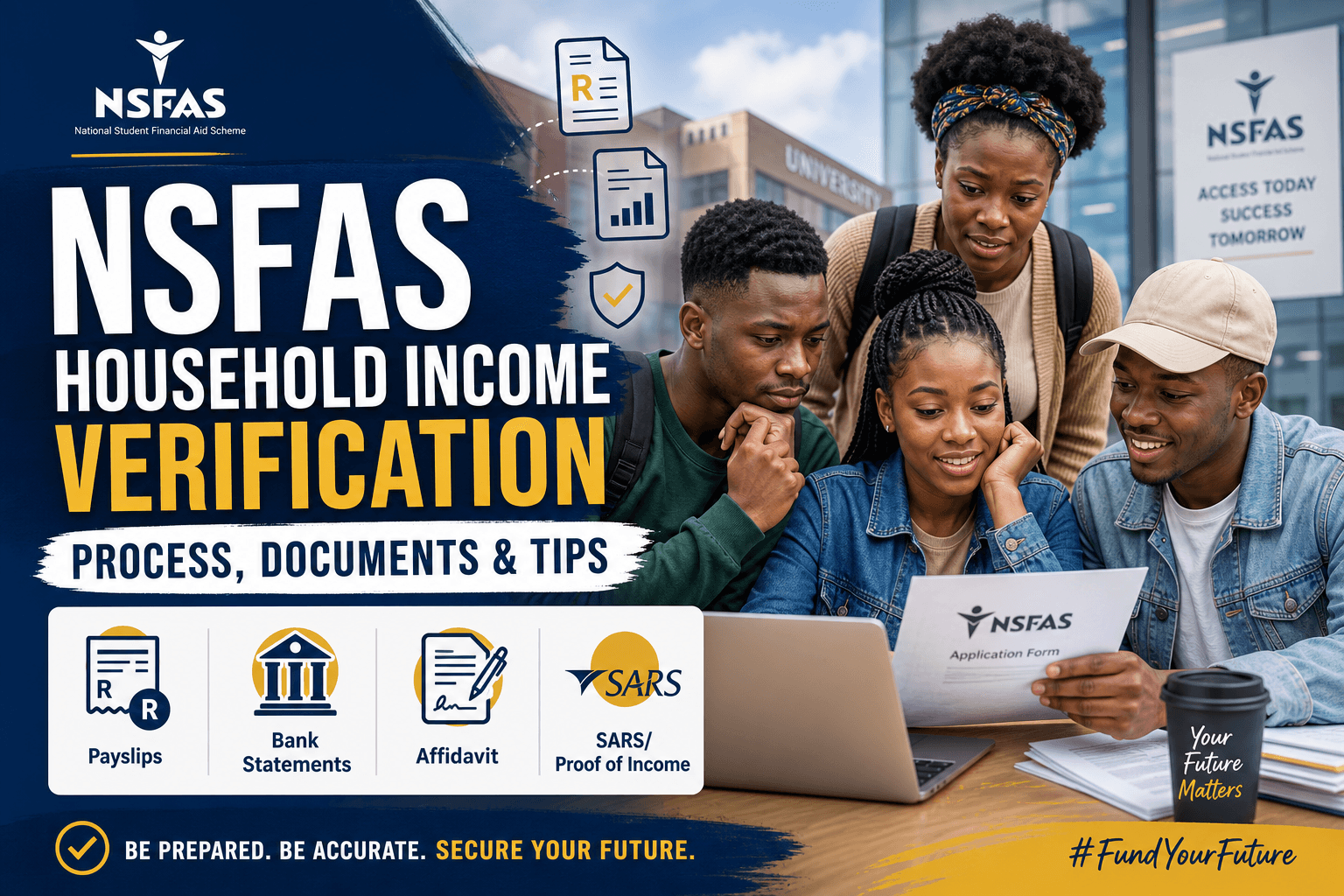
If the electronic checks cannot confirm your details, NSFAS will request additional proof. Possible documents include:
- Payslips
- Employment letters
- Affidavits confirming unemployment or death
- Death certificates
- Divorce orders
- Pension statements
- Bank statements
- Legal guardianship papers
What happens if income cannot be verified?
Reasons include missing employer records, outdated tax data, wrong ID numbers or missing documents. In such cases NSFAS may:
- Ask for more paperwork
- Place the application on hold
- Delay the funding decision
- Reject the application if verification fails.
Verification for unemployed parents or guardians
If a parent is not working, NSFAS may require an affidavit stating the unemployment and any other sources of income (social grants, pensions, etc.). Provide honest information and the requested proof.
How NSFAS detects fraud
Red flags include income that does not match SARS data, fake payslips, incorrect IDs and hidden income sources. When fraud is found NSFAS can reject the application, cancel awarded funds and refer the case for investigation.
Changing household circumstances
Life events such as job loss, death of a breadwinner, business closure, divorce or serious illness can affect income. Inform NSFAS right away and upload the relevant documents so your case can be reassessed.
Common mistakes that cause verification delays
- Entering wrong ID numbers
- Leaving out a parent or guardian
- Uploading blurry or incomplete scans
- Providing outdated contact details
- Misreporting the amount of income
- Not responding to NSFAS messages
How long verification takes
Times vary. Automated checks can finish in a few days, while applications needing manual review may take weeks. Keep checking your NSFAS portal for updates.
Why accurate information matters
Correct data ensures a fair distribution of funds, speeds up processing and protects government resources. Honesty is the single most important responsibility you have as an applicant.
Edustairs advice
One of the biggest errors is assuming NSFAS will not look at your income. Modern systems compare your details with many government databases. Double‑check everything before you hit submit. Clear documents and correct IDs dramatically reduce delays.
Frequently asked questions (FAQ)
- Does NSFAS check income with SARS? Yes. The scheme uses SARS records to confirm declared earnings.
- Can an application be rejected for wrong income information? Yes. Incorrect or unverifiable data can lead to rejection or further investigation.
- What documents might NSFAS request? Payslips, affidavits, employment letters, death certificates, proof of unemployment, pension statements and other relevant records.
- What if my parent loses their job after I apply? You can request a reassessment by submitting proof of the job loss.
- Can NSFAS detect false information? Yes. Electronic checks and document verification are designed to spot inconsistencies.
Next steps
Start your application now. Follow the steps, keep your information accurate, and respond quickly to any NSFAS request. By staying organised you give yourself the best chance of receiving the funding you need to study.