
Right now, many South African job seekers are doing everything they were told to do, but still struggling to find work. If you are in that group, this article matters because it explains a hard truth in today’s market: a qualification is useful, but it is not always enough. In 2026, employers want proof that you can work well, communicate clearly, and handle real tasks. That is why the SETA-SA conversation around skills and workplace readiness is so important for young people today.
Qualified Is Not the Same as Employable
Many young people finish Grade 12, study further, and complete certificates, diplomas, degrees, learnerships, or short courses. Yet thousands are still unemployed.
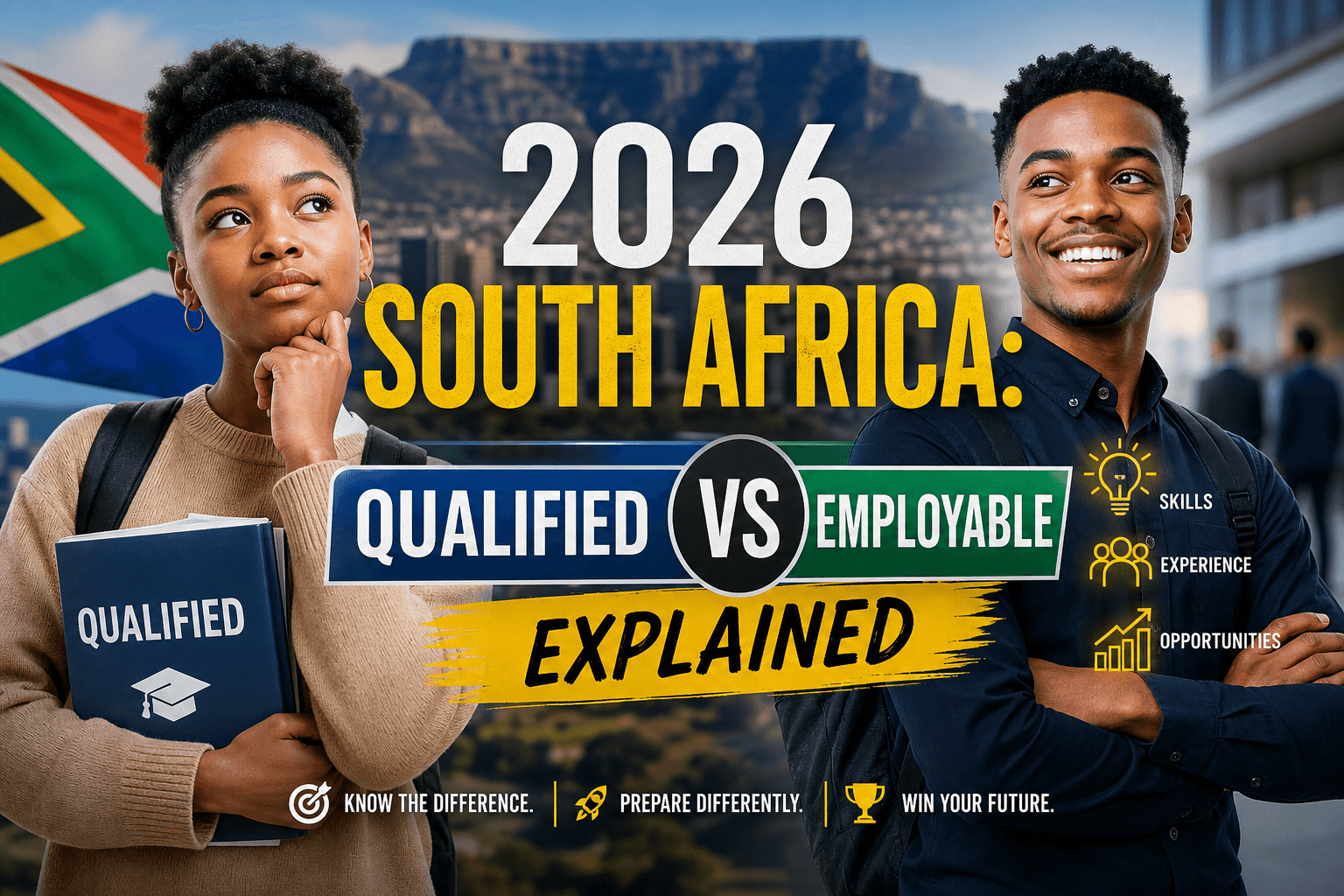
This is one of the biggest realities of the job market in South Africa. Being qualified means you completed formal learning. Being employable means you can actually function in a workplace.
Employers are no longer only asking, “Do you have a qualification?” They are also asking, “Can you solve problems, work with others, use digital tools, and represent the company well?”
That difference can change your future.
Quick Overview
| Topic | Explanation |
| Being Qualified | Having a certificate, diploma, degree, or formal training |
| Being Employable | Having the practical skills, attitude, adaptability, and readiness employers want |
| Main Problem in 2026 | Many applicants have qualifications but lack workplace readiness |
| What Employers Want | Communication, reliability, digital skills, initiative, teamwork, problem-solving |
| Key Reality | A qualification may get you shortlisted, but employability gets you hired |
| Important Advice | Build experience, visibility, skills, and proof of capability |
Why This Matters More in 2026
South Africa’s unemployment problem has changed the job market. In the past, a qualification could open doors more easily. Today, there are often thousands of applicants for one opportunity.
Some internships, learnerships, and entry-level vacancies attract very large numbers of applications. That means employers can be more selective.
They are comparing more than qualifications. They are looking at:
- Communication ability
- Work ethic
- Adaptability
- Computer literacy
- Problem-solving ability
- Confidence
- Digital presence
- Professionalism
- Experience
- Initiative
- Reliability
This is why two people with the same qualification can have very different results.
One gets hired quickly.
The other waits for years.
The difference is often employability.
What It Means to Be Qualified
Being qualified means you have completed some form of formal learning.
This may include:
- A matric certificate
- TVET qualification
- University degree
- Learnership
- Skills programme
- Trade certificate
- Short course
- Internship programme
Qualifications matter because they show that you completed structured learning and gained knowledge in a field.
Many careers still legally require qualifications, especially:
- Nursing
- Teaching
- Engineering
- Policing
- Accounting
- Law
- Healthcare
- Technical trades
Without the required qualification, you may not even be allowed to apply.
But one common mistake is believing that a qualification automatically leads to a job. That is no longer true.
What It Means to Be Employable
Being employable means you can perform well in a real workplace.
It means an employer believes you can add value, learn fast, and handle responsibility.
A highly employable person may not always have the highest qualification, but they often know how to:
- Communicate professionally
- Present themselves confidently
- Use technology well
- Adapt quickly
- Take initiative
- Work under pressure
- Learn independently
- Follow instructions
- Stay disciplined
This is what many employers now value most.
The Biggest Mistake Many Young People Make
Many job seekers spend years collecting qualifications but ignore employability.
For example:
- Someone may complete a diploma but cannot write a professional email.
- Another may finish a degree but struggles in interviews.
- Someone may have certificates but cannot use Microsoft Excel properly.
- Another may know the theory but cannot apply it at work.
This creates a gap between education and workplace reality.
Employers notice this quickly.
Why Employers Focus More on Employability Now
The workplace has changed. Companies now operate in faster, more digital, more competitive environments.
They need people who can adapt and contribute quickly.
This is especially true in:
- Retail
- Logistics
- Government administration
- Customer service
- Banking
- Technology
- Call centres
- Security
- Hospitality
- Public sector internships
Employers now ask, “Can this person work in a modern workplace?” not only, “Did this person pass exams?”
Signs You Are Qualified but Not Yet Employable
Many people fall into this category without realising it.
Here are some common warning signs:
You only apply online but never improve yourself
Sending applications every day without building your skills often leads to frustration.
You struggle with interviews
This may show that you need more confidence and more workplace awareness.
Your CV only lists education
A stronger CV should also show:
- Volunteer work
- Projects
- Digital skills
- Achievements
- Leadership
- Practical exposure
You avoid learning technology
Digital literacy is now needed in almost every field.
You wait for opportunities instead of building momentum
Employable people keep learning, practising, and gaining exposure.
What Makes Someone Highly Employable in 2026
Communication Skills
Many employers reject candidates because they do not communicate well.
This includes speaking, writing, listening, and professional behaviour.
Even small things matter, such as:
- Answering professionally
- Writing emails properly
- Greeting respectfully
- Speaking with confidence
Digital Skills
Basic computer skills are now very important.
You should know how to use:
- Microsoft Word
- Excel
- Online application systems
- Virtual meeting tools
- Google Docs
- Typing tools
- Internet research
Even many government jobs now use online systems.
Reliability
Employers value people they can trust.
This means:
- Being on time
- Following instructions
- Meeting deadlines
- Being consistent
- Taking responsibility
Adaptability
The world changes quickly, and workplaces change with it.
Employers prefer candidates who can:
- Learn new systems
- Adjust to change
- Handle pressure
- Work with different personalities
Emotional Maturity
Workplaces need people who can stay calm and respectful.
This includes:
- Handling criticism
- Managing conflict well
- Staying calm under pressure
- Respecting authority
- Working in teams
Problem-Solving Ability
Employers want people who can think, not just people who hold certificates.
They value candidates who can:
- Identify problems
- Suggest solutions
- Think independently
- Show initiative
Why Some People Without Degrees Get Hired Faster
This can be frustrating for graduates, but there is usually a reason.
Some people without degrees are still highly employable.
For example, they may have:
- Strong communication skills
- Good workplace behaviour
- Customer service experience
- Fast learning ability
- Practical experience
- Confidence with technology
At the same time, some graduates may still struggle with confidence, teamwork, or real-world work habits.
Employers often choose the person who seems easier to train and place in the workplace.
Why Experience Matters
Experience is one of the strongest ways to build employability.
That is why internships, volunteering, contract work, EPWP programmes, YES programmes, and learnerships matter so much.
They help young people learn:
- Workplace behaviour
- Communication
- Time management
- Teamwork
- Real-world systems
Even unpaid volunteer work can help if it gives you practical exposure.
How to Become More Employable in 2026
Build a Skills Portfolio
Do not rely only on your qualification.
Add practical skills such as:
- Computer literacy
- Administration
- Customer service
- Data capturing
- Report writing
- Social media management
- Public speaking
Improve Your CV
Your CV should show more than education.
Include:
- Volunteer work
- Achievements
- Leadership roles
- Community involvement
- Technical skills
- Online certifications
Learn Professional Communication
Practice interviews, email writing, telephone etiquette, and workplace professionalism.
These simple skills can give you a strong advantage.
Gain Any Experience You Can
Even small opportunities help.
- Volunteering
- Assisting local organisations
- Church administration
- Community projects
- Freelance work
- Side hustles
Experience builds confidence and makes you stronger in applications.
Develop a Learning Mindset
The most employable people keep learning.
In 2026, employers value people who can learn new skills quickly and stay useful in changing environments.
Education vs Workplace Reality
One major challenge is that many education systems still focus heavily on theory.
But workplaces care about results, performance, adaptability, productivity, communication, and practical execution.
That is why some graduates feel shocked when they start looking for work.
They realise:
- Workplaces move faster
- Expectations are different
- Communication matters more
- Practical thinking matters more
Why This Matters for South African Youth
Youth unemployment in South Africa is very high, so competition is strong.
That means employability becomes a real advantage.
The people who stand out usually combine:
- Qualifications
- Skills
- Professionalism
- Experience
- Confidence
- Adaptability
That combination creates opportunities.
The Future of Employability Beyond 2026
The gap between qualification and employability may continue to grow.
Artificial intelligence, automation, and digital systems are already changing jobs around the world.
This means future workers will need to be:
- More adaptable
- More confident with technology
- Better communicators
- Stronger problem-solvers
Qualifications will still matter, but practical ability will matter even more.
Edupstairs Advice
If you are unemployed right now, do not think your qualification is useless.
It still matters. But it is only one part of your employability profile.
You also need to build:
- Communication
- Digital skills
- Experience
- Professionalism
- Confidence
- Practical exposure
- Reliability
Your goal is not only to become educated.
Your goal is to become employable.
That is the difference many people understand too late.
If you understand it now, you can move ahead of many other applicants.
How to Apply
This article is career guidance, so there is no single application form here. If you are looking for official opportunities, always use the official links from the organisation or employer advertising the post.
When applying for any job, internship, learnership, or bursary, follow these steps:
- Read the full advert carefully.
- Check the requirements and closing date.
- Prepare your CV and supporting documents.
- Make sure your contact details are correct.
- Apply only through the official application link or official instructions.
- Keep a record of every application you submit.
Do not pay anyone for a job promise. Use only official recruitment channels.
Tips to Improve Your Chances
- Keep your CV short, clear, and neat.
- Use simple professional language in emails.
- Practice interview questions before the interview.
- Learn basic computer skills if you do not have them yet.
- Get some experience through volunteering or small projects.
- Show that you are punctual, respectful, and willing to learn.
- Apply only for roles that match your documents and skills.
Frequently Asked Questions
Is a qualification still important in 2026?
Yes. Many jobs still need formal qualifications. But qualifications alone are often not enough.
Can someone without a degree still become employable?
Yes. Strong skills, experience, communication, and professionalism can improve employability a lot.
What are the most important employability skills today?
Some of the key skills are communication, computer literacy, teamwork, reliability, adaptability, and problem-solving.
Why do employers ask for experience in entry-level jobs?
Because they want people who already understand the basics of work and need less supervision.
How can I improve my employability without money?
You can volunteer, learn free online skills, practice communication, improve your CV, gain community experience, and learn digital tools.
Final Word
South Africa’s job market is tough, and many good people struggle even after studying hard. That does not mean you have failed. It means you must widen your focus.
Keep building your qualification, but also build the skills that make employers trust you. Learn, practise, gain exposure, and stay ready.
If you do that, you give yourself a much better chance of standing out in a very competitive market.
Disclaimer: This article is for informational and career guidance purposes only. Employment requirements, recruitment processes, and workplace expectations may differ between employers, industries, and government departments in South Africa. Always verify official job requirements directly from the recruiting organisation before applying.
EDUPSTAIRS IS A REGISTERED NON-PROFIT ORGANISATION NPO No: 232 – 182, PUBLIC BENEFIT ORGANISATION (PBO): 930066984. EDUPSTAIRS DOES NOT, IN ANY WAY OR FORM, SOLICIT MONEY OR CV’S FROM PEOPLE FOR JOBS. PLEASE BE AWARE OF PHONY JOB POSTINGS AND RECRUITMENT FRAUD. USE THE EDUPSTAIRS SCAM DETECTOR TOOL TO SPOT A SCAM BEFORE YOU APPLY.