
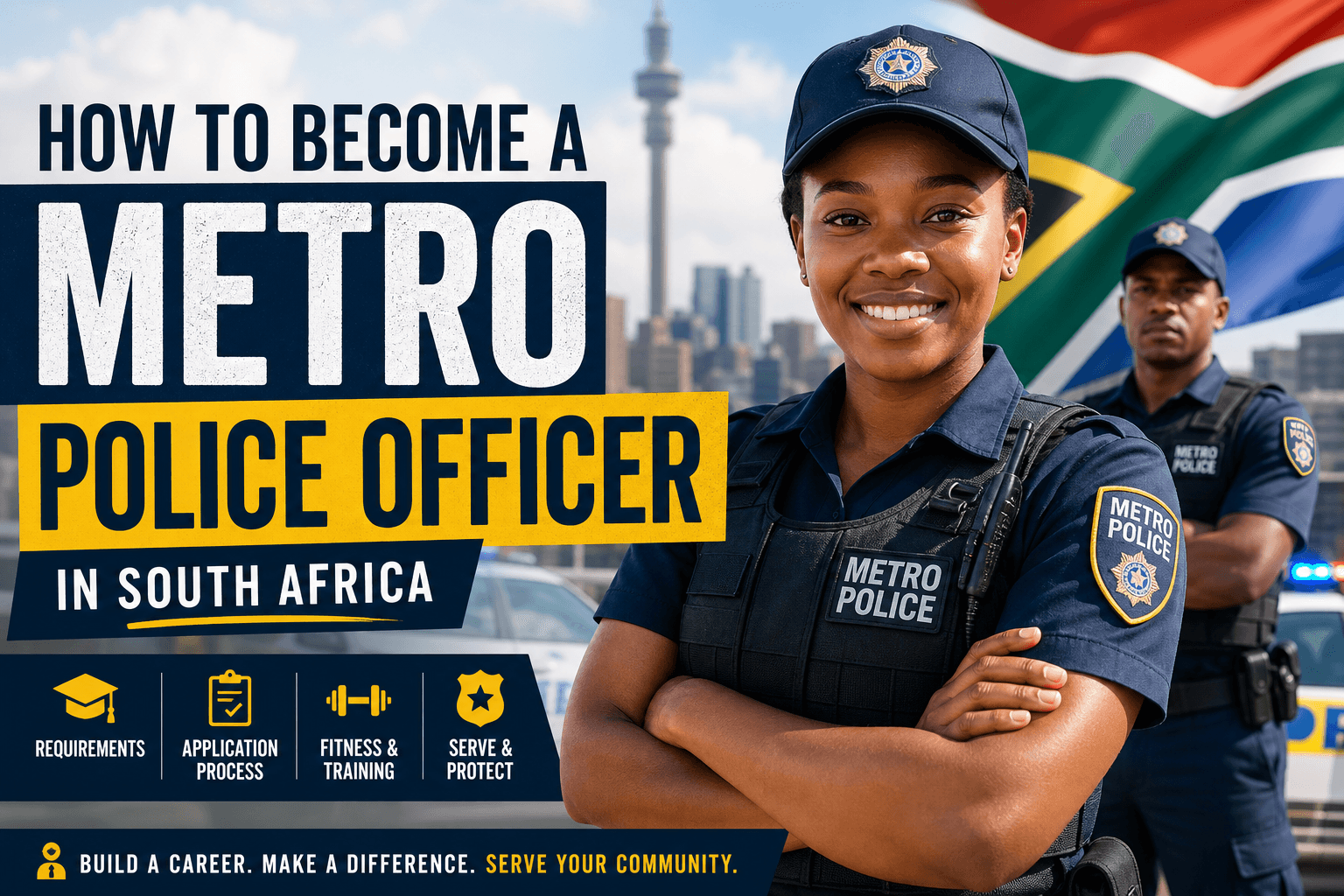

If you are looking at law enforcement careers right now, Metro Police may be one of the most important options to understand. In South Africa, these jobs are still highly sought after because they offer public service, structured training, and long-term government employment. Many young people also want a career where they can serve their communities directly. For more career guidance and skills pathways, you can also visit SETA-SA.
What a Metro Police Officer Does
A Metro Police Officer works for a municipality, not for SAPS. The job is part of local government law enforcement.
Metro Police officers help to enforce by-laws, manage traffic rules, support crime prevention, and keep public spaces safe. Their work is often visible in towns and cities every day.
Common duties include:
- Enforcing road traffic laws
- Patrolling streets and public areas
- Supporting crime prevention operations
- Enforcing municipal by-laws
- Managing vehicle checkpoints
- Helping during emergencies
- Supporting public safety operations
- Managing crowds during events or protests
Some metro departments also have special units. These can include K9 units, highway patrol, tactical teams, public order units, undercover teams, drug enforcement teams, and CCTV monitoring teams.
Who Can Apply
Many applicants struggle because they think the process is open to everyone at any time. It is not. Metro Police recruitment is strict, and each municipality has its own rules.
In most cases, you will need the following:
- Grade 12 / National Senior Certificate
- A valid Code B driver’s licence
- A clean criminal record
- Good physical fitness
- Psychometric test results
- Strong communication skills
- South African citizenship
The usual age range is 18 to 35 years, but this can differ by municipality.
Most municipalities also expect you to be healthy, disciplined, and honest. If you give false information, use fake documents, or hide a criminal record, you can be disqualified.
Minimum Qualification
Grade 12 is the basic requirement in most municipalities. Some may also want you to be good in English and have basic numeracy skills.
Subjects that can help include:
- English
- Life Orientation
- Mathematical Literacy
- Physical Sciences
- Computer Applications Technology
If you left school years ago, you can still apply as long as you have matric and meet the other requirements.
Driver’s Licence
A valid Code B driver’s licence is usually required. Some municipalities may also want you to be able to drive a manual vehicle.
This is one of the first things you should work on. Many people wait until recruitment opens, then they realise they are not ready. That often costs them the opportunity.
Clean Record
Metro Police departments do background checks. A criminal record can block your application, especially if the offence is serious or related to fraud, violence, drugs, or dishonesty.
Pending criminal cases may also affect your chances. So can fake qualifications, false information, gang links, or drug use.
Fitness and Health
Fitness is not optional. It is one of the biggest reasons applicants are rejected.
You may be tested on:
- Running
- Push-ups
- Sit-ups
- Strength
- Endurance
- Agility
- Flexibility
You do not need to be an athlete, but you do need to be prepared. Start early with jogging, bodyweight exercises, stretching, and healthy eating.
What You Gain
A Metro Police career can give you valuable work experience and long-term growth. The job is demanding, but many people are drawn to it because it offers purpose and structure.
Benefits and learning opportunities may include:
- Formal law enforcement training
- Public service experience
- Discipline and leadership skills
- Traffic policing exposure
- Crime prevention experience
- Opportunities to move into special units
- Possible career growth in local government law enforcement
After training, you may be placed in patrols, traffic enforcement, roadblocks, or community operations. Over time, some officers move into tactical, K9, or other specialist roles.
How to Apply
You cannot usually apply at any time. Metro Police jobs are advertised when a municipality needs new trainees or officers.
Official recruitment is often posted on:
- Municipal websites
- Government vacancy portals
- Municipal social media pages
- Local newspapers
- Official municipal recruitment portals
Step 1: Watch for official adverts
Check only official channels. Do not trust random WhatsApp messages, Facebook posts, or people who say they can “help you get in” for money.
Some of the well-known metro police departments include:
- Johannesburg Metropolitan Police Department
- Tshwane Metro Police Department
- Ekurhuleni Metropolitan Police Department
- Cape Town Metro Police
- eThekwini Metro Police
Recruitment is not monthly. Some municipalities only recruit once every few years, depending on budgets and staffing needs.
Step 2: Prepare your documents
Before you apply, make sure your documents are ready and correct. Missing documents are a common reason for rejection.
Usually required:
- Certified copy of your ID
- Certified copy of your matric certificate
- Copy of your driver’s licence
- Updated CV
- Proof of residence
- Completed application form
- Medical questionnaire, if requested
Use a clean, simple CV. Check your phone number and email address carefully. If the advert asks for certified documents, make sure the certification is recent.
Step 3: Submit your application correctly
Follow the instructions exactly as written in the advert. If the municipality asks for online applications, use the correct portal. If they ask for hand delivery or email submission, do that only as stated.
Never send extra documents that are not requested. Never guess. Read everything carefully.
Step 4: Pass the first screening
After the closing date, the municipality checks applications and shortlists candidates. This usually includes verifying your qualification, licence, age, citizenship, and criminal record.
Only shortlisted candidates move to the next stage. Competition is very high, and many people apply for a small number of vacancies.
Step 5: Complete fitness tests
Fitness testing is often one of the first major elimination stages. If you are not ready, you may fail immediately.
You may be tested on:
- 2.4 km run
- Sprint tests
- Push-ups
- Sit-ups
- Flexibility tests
Each municipality sets its own standard, so prepare well before the opening date.
Step 6: Attend medical tests
Metro Police officers must be medically fit for duty. This can include eyesight tests, hearing tests, blood pressure checks, general health screening, and drug tests.
If you have a medical condition, do not hide it. Honesty is always better than false information.
Step 7: Complete psychometric testing
Many applicants underestimate this stage. These tests help the municipality understand how you think, react under pressure, and solve problems.
You may be tested on:
- Decision-making
- Stress tolerance
- Emotional control
- Communication
- Problem-solving
- Behavioural fit
Stay calm and answer honestly. These tests are not only about intelligence. They also measure whether you can handle responsibility.
Step 8: Attend the interview
If you pass the earlier stages, you may be called for an interview. This is usually done by a panel.
Interview questions often focus on:
- Why you want to join Metro Police
- Your understanding of public service
- Your discipline
- How you would handle conflict
- Your attitude toward safety and the law
- Your ability to work with the public
Before the interview, research the municipality and learn what its Metro Police department does.
Step 9: Complete training
Successful applicants enter training, usually through a municipal academy or approved training programme. Training can last between 12 and 24 months, depending on the municipality.
Training may include:
- Traffic law
- Municipal by-laws
- Criminal procedure
- Firearm handling
- Self-defence
- Physical training
- Public relations
- Patrol procedures
- Report writing
- Emergency response
The training is strict. You may face early mornings, discipline rules, academic work, and practical assessments. Some trainees fail because they are not prepared for the level of structure.
Step 10: Start field work
After training, you may be assigned to field duties. Some officers begin with a probation period before becoming fully established in the role.
New officers are often placed in:
- Patrol units
- Traffic enforcement
- Community operations
- Roadblocks
- Public safety operations
The first few years are important. This is where you build experience, confidence, and discipline.
Tips to Improve Your Chances
Many applicants feel nervous because the process is competitive. That is normal. The good news is that preparation can help a lot.
Start early
Do not wait for the advert before you prepare. Get your licence early, work on your fitness, and keep your documents ready.
Use only official channels
Never pay for a Metro Police job. Real municipal vacancies do not ask for money. Be careful of fake agents, fake forms, and scam posts.
Keep your record clean
A clean background matters. Stay away from crime, drugs, and dishonest behaviour. Vetting is serious in law enforcement.
Train consistently
Do small workouts every week. Consistency is better than a hard workout once in a while. Build your running ability, core strength, and stamina over time.
Prepare for the interview
Know why you want this job. Be ready to speak clearly, show respect, and explain your commitment to public service.
Metro Police and SAPS Are Not the Same
Some people confuse Metro Police with SAPS. They are both law enforcement jobs, but they are not the same.
| Metro Police | SAPS |
| Works under municipal government | Works under national government |
| Mainly handles traffic and by-laws | Handles broader crime and investigations |
| Operates in metro areas | Has nationwide jurisdiction |
| Uses municipal training structures | Uses SAPS academies |
| Focuses on local law enforcement | Focuses on national policing |
Some officers later move between law enforcement careers, but each process has its own rules.
Common Mistakes to Avoid
Here are the mistakes that often cost applicants their chance:
- Waiting too late to prepare
- Applying without a driver’s licence
- Ignoring fitness training
- Sending incomplete documents
- Using fake certificates or false information
- Trusting scammers on social media
- Missing deadlines
These mistakes are avoidable if you plan ahead.
Final Advice
If becoming a Metro Police Officer is your goal, focus on the basics first. Finish matric. Get your driver’s licence. Keep your record clean. Build your fitness. Then follow only official recruitment channels when jobs are advertised.
This is a competitive career path, and not everyone will be selected. That does not mean you should give up. It means you should prepare properly and stay patient.
When you are ready, read every advert carefully and apply only through the municipality’s official link or portal. If you need more general career support, use trusted sources and keep checking official municipal notices.
Frequently Asked Questions
What qualifications do I need to become a Metro Police Officer?
Most municipalities require Grade 12 and a valid driver’s licence.
Can I apply without experience?
Yes. Most trainee programmes are meant for beginners.
Is Metro Police training paid?
This depends on the municipality. Some programmes offer a stipend or trainee salary.
How long does training take?
Training may take between 12 and 24 months, depending on the municipality.
Can I apply without a driver’s licence?
Usually no. Most Metro Police departments require a valid Code B licence.
Is there an age limit?
Many municipalities prefer applicants between 18 and 35 years old, but this can differ.
Can women apply?
Yes. Metro Police recruitment is open to both men and women.
Is fitness really important?
Yes. Fitness testing is one of the biggest elimination stages.
Disclaimer
This article is for information and career guidance only. Recruitment requirements and training standards may differ from one municipality to another, and they may change over time. Always check the official municipality or Metro Police department before you apply.
EDUPSTAIRS IS A REGISTERED NON-PROFIT ORGANISATION NPO No: 232 – 182, PUBLIC BENEFIT ORGANISATION (PBO): 930066984. EDUPSTAIRS DOES NOT, IN ANY WAY OR FORM, SOLICIT MONEY OR CV’S FROM PEOPLE FOR JOBS. PLEASE BE AWARE OF PHONY JOB POSTINGS AND RECRUITMENT FRAUD. USE THE EDUPSTAIRS SCAM DETECTOR TOOL TO SPOT A SCAM BEFORE YOU APPLY.