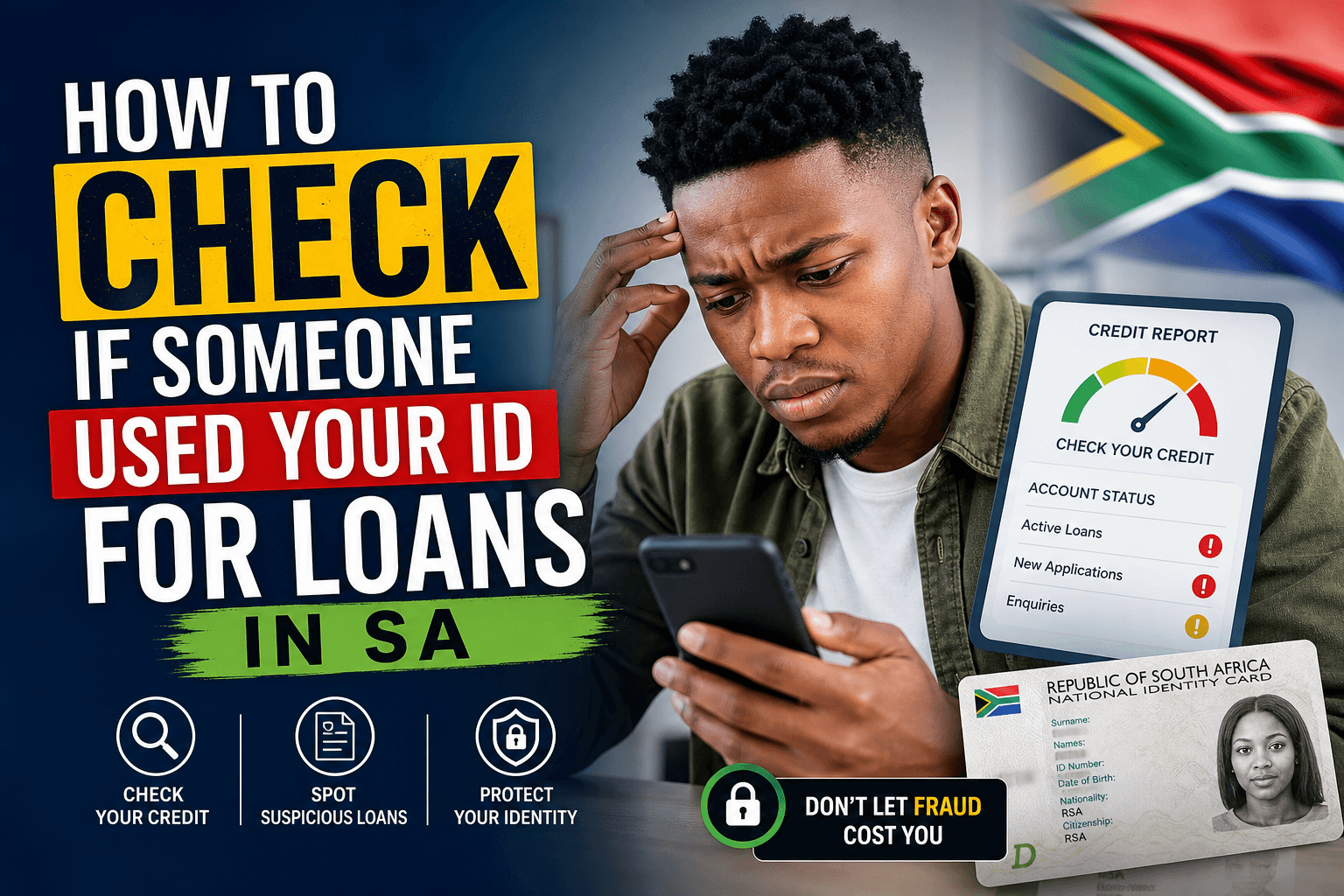

Right now, many South Africans are finding out too late that someone used their ID number for loans, store accounts, or other credit. That is stressful, and it can affect your money, your name, and even future job opportunities. If you want to check your record early, the SETA-SA website can be a useful starting point for trusted guidance, but your first real step is to check your credit profile with the official credit bureaus.
What This Means
Identity fraud happens when another person uses your personal details without your permission. In South Africa, this can include opening a loan, a cellphone contract, a bank account, or a store account in your name.
Many people only discover the problem after they are turned down for credit, receive debt collection calls, or see strange SMS messages about payments they never made.
The good news is that you can check for this. You can also act quickly to reduce the damage.
Who Should Check Their Credit Profile
Everyone should check their credit record from time to time. This is especially important if you have ever shared your ID number for:
- Job applications
- Online forms
- Loan applications
- Recruitment websites
- Social media adverts
- WhatsApp job offers
- SIM swap or banking messages
Fraudsters often need only a few details to try to open credit in your name. These may include your ID number, a fake payslip, a stolen cellphone number, or a fake proof of address.
In some cases, criminals also use stolen photos, selfies, or edited documents to try to pass checks.
Common Warning Signs
Many applicants struggle to notice fraud early. Look out for these signs:
- Calls or SMSes from debt collectors about accounts you do not know
- A credit score that drops without reason
- Loan approval messages you never requested
- OTP messages or banking verification alerts you did not start
- Being declined for credit, a phone contract, or a store account
If any of these happen, do not ignore them. They may be signs that your ID number has been misused.
How to Check If a Loan or Account Was Opened in Your Name
The best way is to request your credit report from a registered credit bureau. Your report shows accounts, credit applications, payment history, judgments, and other important details linked to your ID.
Look carefully for loans, credit cards, store accounts, and enquiries you do not recognise. Also check for wrong addresses, false employment details, or accounts that were opened far from where you live.
Where South Africans Can Check
You can use these official credit bureaus:
TransUnion
Website: TransUnion South Africa
TransUnion can show accounts in your name, your credit score, fraud alerts, and credit enquiries.
Experian
Website: Experian South Africa
Experian provides credit reports, fraud monitoring, and credit score services.
ClearScore
Website: ClearScore South Africa
Many South Africans use ClearScore for free credit score monitoring.
Compuscan
Compuscan also provides consumer credit reports and fraud support.
In many cases, you are entitled to one free credit report each year from a credit bureau. Check the bureau’s official website for the latest rules.
What You Can Gain by Checking Early
Checking your report early can help you:
- Spot fraud before the debt gets bigger
- Protect your credit score
- Stop more accounts from being opened
- Prepare evidence if you need to dispute the debt
- Protect your job, housing, and banking future
Many people do not realise how serious identity fraud can become. If the fraud is not reported, it can lead to blacklisting, court judgments, salary deductions, and major problems with banks and lenders.
What To Do If You Find Fraud
If you see an account or loan that is not yours, act quickly. Do not wait for the matter to sort itself out.
Step 1: Contact the Credit Bureau
Tell the bureau that the account is fraudulent and that you never applied for it. Ask them to open a fraud investigation and place a fraud alert on your profile.
Keep the reference number they give you.
Step 2: Contact the Lender
Call the bank, store, or loan provider directly. Tell them the account is not yours and that you believe your identity has been stolen.
Ask for:
- An investigation reference number
- Copies of the documents used to open the account
- Copies of any signed agreements
- A freeze on the account while the matter is checked
Step 3: Open a Case at SAPS
Report the fraud at your nearest police station. Take your ID document, credit report, SMSes, emails, and any other proof you have.
Ask for a case number and an affidavit confirming the fraud. This can help when you dispute the account later.
Step 4: Report It to SAFPS
The Southern African Fraud Prevention Service helps protect consumers against identity theft. They can assist with fraud alerts and monitoring.
Official website: SAFPS Official Website
Step 5: Secure Your Other Accounts
Fraudsters may also try to use your email, banking app, or cellphone number. Change your passwords straight away.
Also do the following:
- Turn on two-factor authentication
- Contact your bank
- Check for SIM swap fraud
- Review your mobile and email security
How to Protect Yourself in Future
There is no perfect way to stop fraud completely, but you can reduce the risk.
Be careful when sharing your ID copy, selfies, bank statements, or proof of address. Only send these when you really trust the company and need to.
Watch out for fake job websites. Many scam pages collect IDs, CVs, payslips, and banking details from job seekers. Always check that a vacancy is real before you apply.
Also be careful on public Wi-Fi. Do not log into banking apps on unsafe networks. If your cellphone suddenly loses signal for no clear reason, call your network provider immediately because that may be a SIM swap.
Can Someone Really Get a Loan With Only Your ID Number?
Yes, unfortunately it can happen, especially if the fraudster also has other details about you.
They may use your cellphone number, a fake payslip, your banking details, stolen photos, or a proof of address. Some scams also involve phishing messages, fake lenders, or insider abuse.
This is why regular credit checks matter so much.
What Happens If You Ignore It
If you leave identity fraud alone, the problem can grow. The account may go into arrears, your name may be blacklisted, and you may later face legal action for a debt you never created.
You may also struggle to get credit, rent a place to live, open accounts, or pass checks for work and housing.
The earlier you act, the easier it usually is to fix.
Practical Advice for South Africans
Many job seekers and students only check their credit profile after something goes wrong. That is too late in many cases.
Even if you are unemployed, studying, or not applying for a loan, your details can still be misused. Keep your ID copies safe, avoid suspicious links, and verify job adverts before sending documents.
Check your credit profile regularly and report problems immediately. That simple habit can save you a lot of stress later.
Frequently Asked Questions
Can I check my credit report for free in South Africa?
Yes. South Africans can usually get a free credit report from registered credit bureaus.
How long does a fraud investigation take?
It depends on the lender and the case. Some matters take weeks, while others can take months.
Can fraudulent loans be removed?
Yes, if the investigation confirms that identity theft took place.
What if the fraudster used my stolen ID copy?
Report it at once to the credit bureau, SAPS, and SAFPS.
Will fraud affect my credit score?
Yes, especially if the fake account is not paid.
Can I stop anyone from opening accounts in my name?
You can reduce the risk with fraud alerts and regular monitoring, but no system is completely perfect.
Final Advice
If you suspect someone used your ID number, do not wait. Check your credit report, speak to the lender, report the matter to SAPS, and contact SAFPS as soon as possible.
Acting early can protect your money, your name, and your future opportunities.
Disclaimer
This article is for information only and does not replace legal or financial advice. Always speak to official credit bureaus, banks, or legal professionals when dealing with fraud.
EDUPSTAIRS IS A REGISTERED NON-PROFIT ORGANISATION NPO No: 232 – 182, PUBLIC BENEFIT ORGANISATION (PBO): 930066984. EDUPSTAIRS DOES NOT, IN ANY WAY OR FORM, SOLICIT MONEY OR CV’S FROM PEOPLE FOR JOBS. PLEASE BE AWARE OF PHONY JOB POSTINGS AND RECRUITMENT FRAUD. USE THE EDUPSTAIRS SCAM DETECTOR TOOL TO SPOT A SCAM BEFORE YOU APPLY