If you are trying to apply for a job, a bursary, a learnership, or a grant right now, it is important to first make sure your ID record is active. Many South Africans only find out there is a problem when a bank, employer, or government system cannot verify their details. If you need help understanding the systems that support skills and work opportunities in South Africa, you can also visit SETA-SA.
Why this matters now
Your South African ID number is linked to many important services. If your identity status is not active on the Home Affairs system, your application may be delayed or rejected.
This can affect job applications, NSFAS, SASSA, banking, SIM card registration, and other important services. Many people do not know there is a problem until they are already applying.
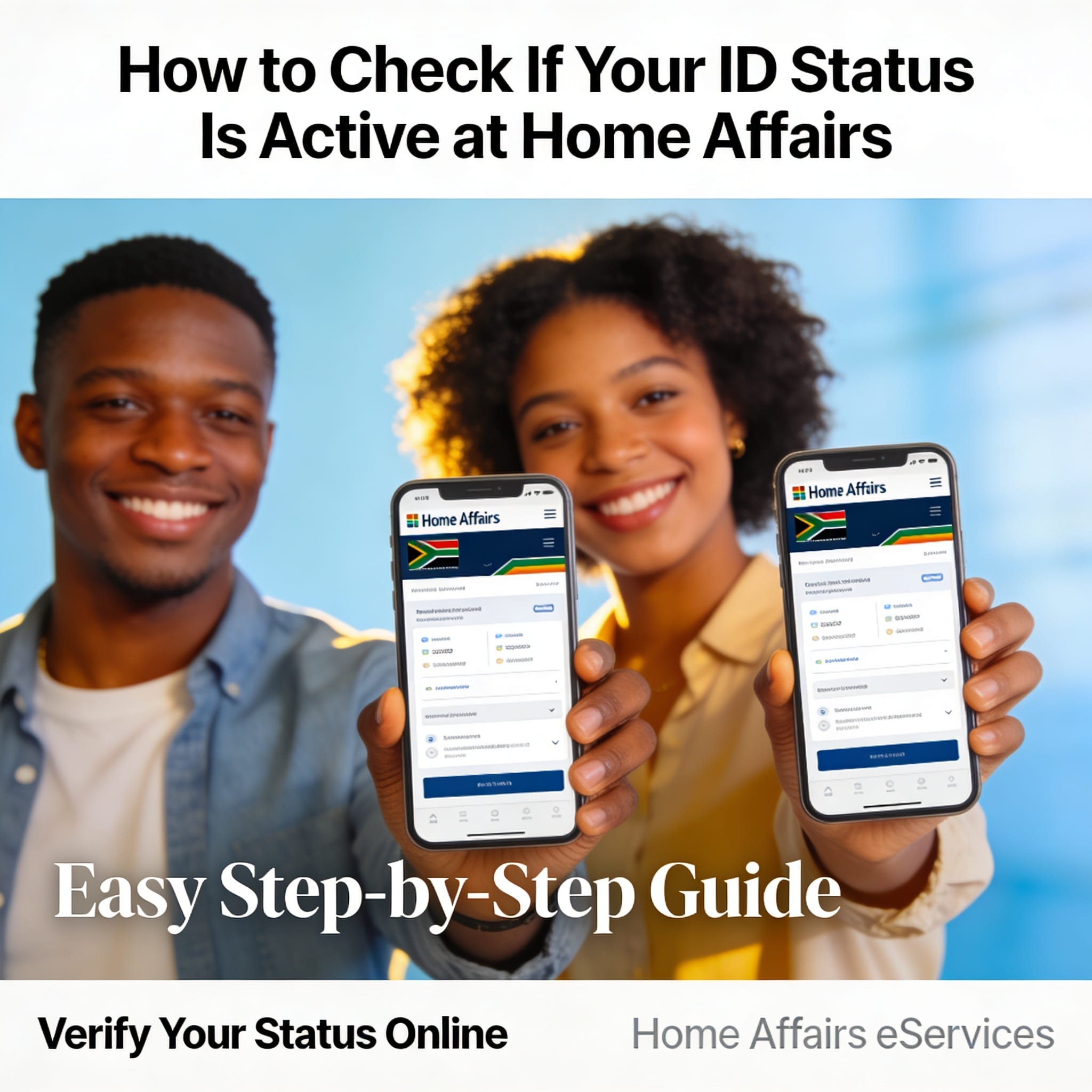
In this guide, you will learn how to check if your identity status is active at Home Affairs, what can cause problems, and what to do if your details do not match.
Quick overview
| Topic | Details |
| Department responsible | Department of Home Affairs |
| What is checked? | Whether your ID number is valid and active |
| Who can be affected? | All South African citizens and permanent residents |
| Common problems | ID inactive, blocked, duplicated, or unverifiable |
| Where to check | Home Affairs offices, banks, SASSA systems, verification platforms |
| Important documents | South African ID card/book, birth certificate, proof of address |
| Main risk | Failed verification for jobs, grants, banking, or education |
| Official website | Department of Home Affairs |
What does “identity status active” mean?
When your identity status is active, it means your South African ID number is correctly recorded on the national population register managed by Home Affairs.
In simple terms, the system recognises you as a valid person with matching records.
An active ID status usually means:
- Your ID number exists on the Home Affairs database
- Your personal details match government records
- Your ID has not been cancelled or blocked
- Institutions can verify your identity electronically
- You can access services linked to your ID number
If your identity status is inactive or unclear, organisations may not be able to confirm who you are through their systems.
Why your identity status matters
Your ID number is used in many places. If your record is inactive or does not match, you may face problems with:
- Job applications
- Learnerships and internships
- NSFAS funding
- SASSA grants
- Banking services
- SIM card registration
- SARS registration
- UIF claims
- Passport applications
- Driver’s licence renewals
- Property transactions
Many employers and institutions now use digital verification before they move your application forward.
Signs that your ID status may have a problem
You may need to check your Home Affairs identity status if:
- A bank says your ID cannot be verified
- SASSA says your identity verification failed
- NSFAS cannot confirm your details
- You get a “details do not match” message
- Your job application fails verification
- Your RICA registration does not go through
- Your UIF or SARS profile has mismatched details
- You are told your ID number is duplicated
- Your smart ID application is delayed for unusual reasons
Many applicants struggle with this because the error message is often short and confusing.
How to check if your identity status is active
1. Visit a Home Affairs office
The most reliable way is to go to a Department of Home Affairs office.
Officials can check whether:
- Your ID is active
- Your details appear correctly
- Your fingerprints match
- Your identity number is duplicated
- Your record has errors or restrictions
Take these documents with you:
- South African ID card or green ID book
- Birth certificate, if available
- Proof of address
- Supporting documents if your details changed
You should explain the exact problem you are facing so they can check the right record.
2. Use bank verification systems
Some South African banks connected to Home Affairs can tell you quickly if your ID verification fails.
If a bank says your identity cannot be verified through Home Affairs, that may point to a record problem.
3. Check during SASSA verification
The SASSA system often picks up Home Affairs identity issues during grant checks.
Common messages include:
- Identity verification failed
- Existing income source detected
- Details do not match Home Affairs records
- ID number invalid
You can check SASSA-related verification information on the official SRD site here: SASSA SRD Website
4. Verify your smart ID or passport application status
Sometimes smart ID and passport applications show that there is a problem with your identity record.
You can monitor these applications on the official eHomeAffairs portal: Home Affairs eHomeAffairs
If your application stays stuck for too long, Home Affairs may need to check your identity record manually.
Common reasons why an identity status becomes problematic
Duplicate identity records
This happens when the system finds more than one record linked to the same person.
This can happen because of:
- Data capture errors
- Old manual records
- Incorrect birth registrations
- Fraudulent activity
Incorrect personal details
Small differences can cause verification problems, such as:
- Name spelling differences
- Wrong date of birth
- Missing second names
- Different surname formats
- Incorrect gender marker
Fingerprint problems
Biometric verification can fail if:
- Fingerprints were badly captured
- Old records are damaged
- Your fingerprints changed over time because of manual work or medical reasons
Deceased status error
In rare cases, a living person may be wrongly marked as deceased on the national register.
This is serious and must be corrected as soon as possible at Home Affairs.
Fraud or identity theft
If someone uses your ID number illegally, your profile may be flagged for investigation.
This can delay applications until the matter is cleared.
What to do if your identity status is inactive or incorrect
Step 1: Visit Home Affairs immediately
Do not ignore the problem.
Ask for:
- A full identity record check
- Correction of personal details
- Fingerprint verification
- Investigation into duplicate records
Step 2: Bring supporting documents
Helpful documents may include:
- Birth certificate
- School records
- Matric certificate
- Marriage certificate
- Divorce order
- Proof of residence
- Affidavit
- Passport
- Driver’s licence
Step 3: Ask for written feedback
If possible, ask for:
- A case reference number
- A written explanation of the issue
- Expected correction timelines
This can help if you need to show another institution that the matter is being handled.
Step 4: Follow up regularly
Some cases take time, especially when records must be checked by hand.
Keep following up with your reference number until the issue is resolved.
How long does it take to fix identity record problems?
The time depends on the type of problem.
| Issue type | Possible timeline |
| Minor detail correction | Few days to weeks |
| Fingerprint verification | Several days |
| Duplicate ID investigation | Weeks or months |
| Deceased status reversal | Can take extended investigation |
| Fraud investigation | Depends on complexity |
Can you still apply for jobs or grants while the issue is being fixed?
Sometimes yes, but many systems need electronic verification before they continue.
You should:
- Tell the employer or institution about the issue
- Keep proof of your Home Affairs case
- Continue following up until the matter is resolved
Some organisations may allow your application to continue while they wait for updates.
Tips to protect your identity status
To lower the risk of future problems, you should:
- Never share ID copies carelessly
- Report lost IDs immediately
- Update Home Affairs after a name change
- Make sure your bank details match your ID
- Watch for suspicious activity
- Be careful of scams asking for ID copies online
How identity verification affects job seekers
Many South African employers now use automated checks to verify:
- Citizenship
- Criminal records
- Qualifications
- Identity validity
If your ID status is inactive, your application may be rejected before a recruiter even sees it.
This is one reason many unemployed South Africans keep getting rejected without understanding why.
Edupstairs advice
At Edupstairs, we encourage you to check that your personal details match government records before applying for jobs, bursaries, grants, or learnerships.
Many applications fail quietly because the system cannot confirm the applicant’s details.
If you think there is a problem with your identity status:
- Act quickly
- Keep copies of all documents
- Follow up often
- Avoid unofficial “fixers” or scams
- Use official government channels only
Your ID number is one of the most important records linked to your future opportunities in South Africa.
Frequently asked questions
Can I check my identity status online?
There is no public Home Affairs portal that shows “active” identity status directly. Most people only discover problems during verification with banks, SASSA, or employers.
What does “ID verification failed” mean?
It usually means your details could not be matched with Home Affairs records.
Can Home Affairs unblock an inactive ID?
Yes, depending on what caused the problem.
What if my ID number is duplicated?
Home Affairs will investigate and may ask for fingerprints and supporting documents.
Can identity problems affect NSFAS or SASSA?
Yes. These systems depend heavily on Home Affairs verification.
Can somebody steal my identity using my ID copy?
Yes. That is why you must protect your documents carefully.
Next step
If you are struggling with verification problems, do not wait for the issue to get worse. Visit Home Affairs, keep your documents ready, and follow up until your record is corrected.
When your ID details are active and correct, it becomes easier to apply for jobs, learnerships, internships, bursaries, and grants with fewer delays.
Disclaimer
This article is for general information only and does not replace official guidance from the Department of Home Affairs or other government institutions. Processes and verification systems may change over time.
EDUPSTAIRS IS A REGISTERED NON-PROFIT ORGANISATION NPO No: 232 – 182, PUBLIC BENEFIT ORGANISATION (PBO): 930066984. EDUPSTAIRS DOES NOT, IN ANY WAY OR FORM, SOLICIT MONEY OR CV’S FROM PEOPLE FOR JOBS. PLEASE BE AWARE OF PHONY JOB POSTINGS AND RECRUITMENT FRAUD. USE THE EDUPSTAIRS SCAM DETECTOR TOOL TO SPOT A SCAM BEFORE YOU APPLY